
I’ve recently been delighted to discover some embroidery and textile delights while out and about on day trips in Hampshire and West Sussex. So I thought I’d document some of the ones that stood out for me.
It would be great to discover other places where embroidery treasure can be found, so if you know of any, please do add them in the comments!
As I was writing this post, I realised I have quite a few to share! So I’m going to focus on just the ones I’ve seen in Hampshire and West Sussex in this post. Wouldn’t it be lovely if this became a series of posts about interesting embroideries to discover!
Embroideries to see in Hampshire and West Sussex
Earlier this summer, I had a week’s holiday that included a few country houses. As well as being lovely places to spend a summer’s day, some turned out to be good for spotting some historic embroidery gems!
Petworth House
If you want to feel immersed in a quintessentially quaint English town, Petworth is a great place to go!
Petworth house is an amazing place to visit if you’re an art lover. It’s described as ‘displaying one of the finest art collections in the care of the National Trust’. For example, there are an impressive number of J.M.W. Turner paintings. No doubt due to the artist frequently staying at the house.
Aside from all the fine art, another thing I love about Petworth is its huge park. It’s such a beautiful place for a country walk. For a shorter walk, you can go around the lake that stands out in the vistas from the house. Or there’s the much bigger deer park to explore if you’re up for it.
On the embroidery side of things, in the art gallery area near the end of the route through the house, I was thrilled to spot this delight:
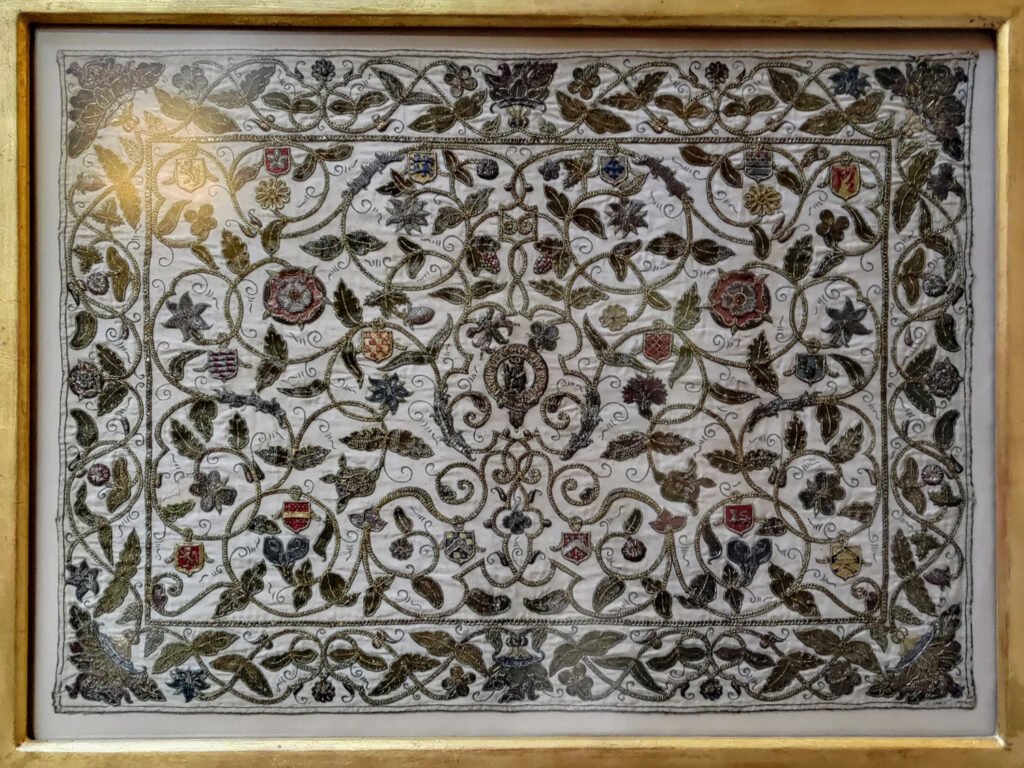
What a beautiful example of combining goldwork and crewelwork embroidery! I guessed it might be from the Tudor period based on the design. i.e. The scrolling vines linking all the flora and fauna motifs, which include a couple of Tudor roses.
The information at Petworth House confirmed I’d been right about the era. That in itself felt rather exciting. You don’t get to see many intact embroideries that were stitched nearly 500 years ago!
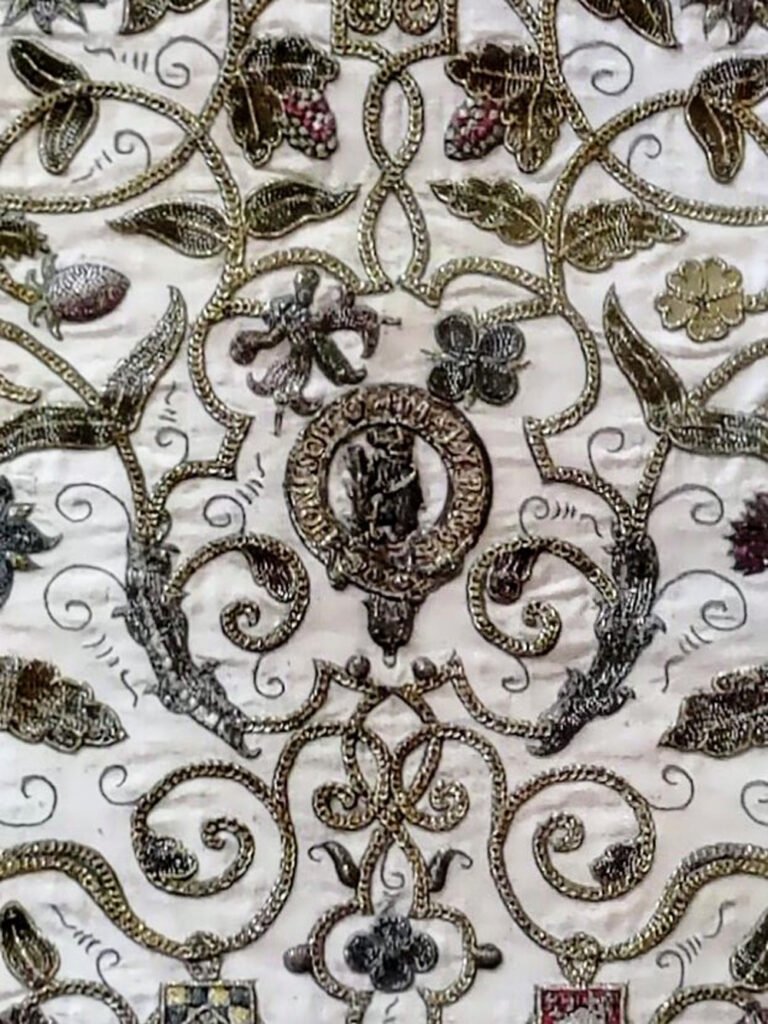
I was also intrigued by the central motif as it looked like the bear and staff of Warwickshire. I haven’t been able to confirm that’s what it is for sure, but I was even more excited when I found the piece in the National Trust’s online collection. There you can see that the embroidery is believed to be the work of Lady Jane Grey. The ill fated 9 day Queen of England, whose father in law was the Earl of Warwick!
Hinton Ampner
As country houses go, Hinton Ampner feels a little more on the modest side. But it still packs a punch with some stunning pieces of art and furniture.
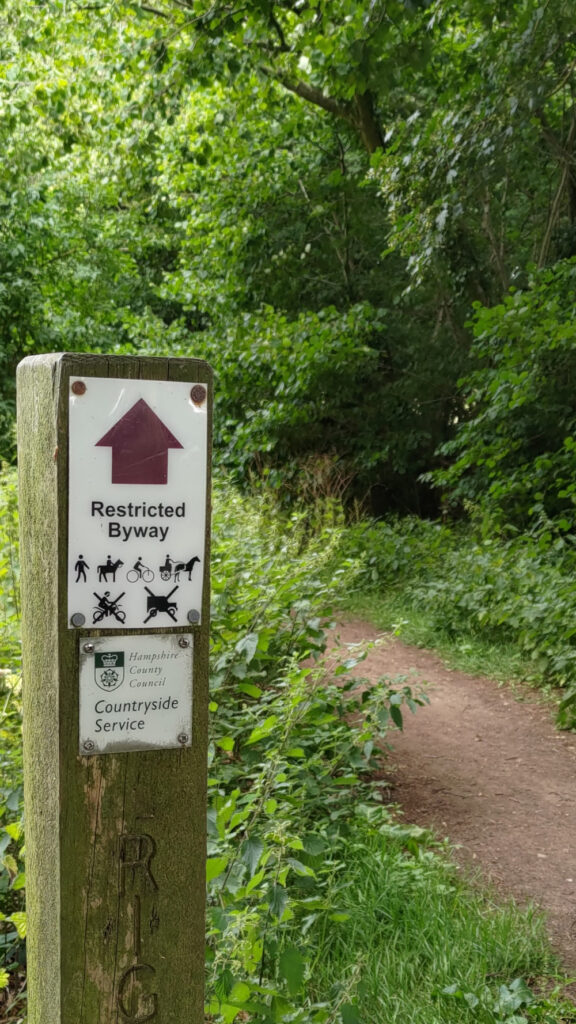
There’s lots to explore outside as well. I enjoy walking around the many different sections of the garden, which includes a water lily pond and vegetable garden. Then just beyond the gardens you have multiple options for taking a walk along country paths. Or as this sign suggests, you could even take your horse and trap!
In the house, I was quite taken with this embroidered set of desk furnishings.
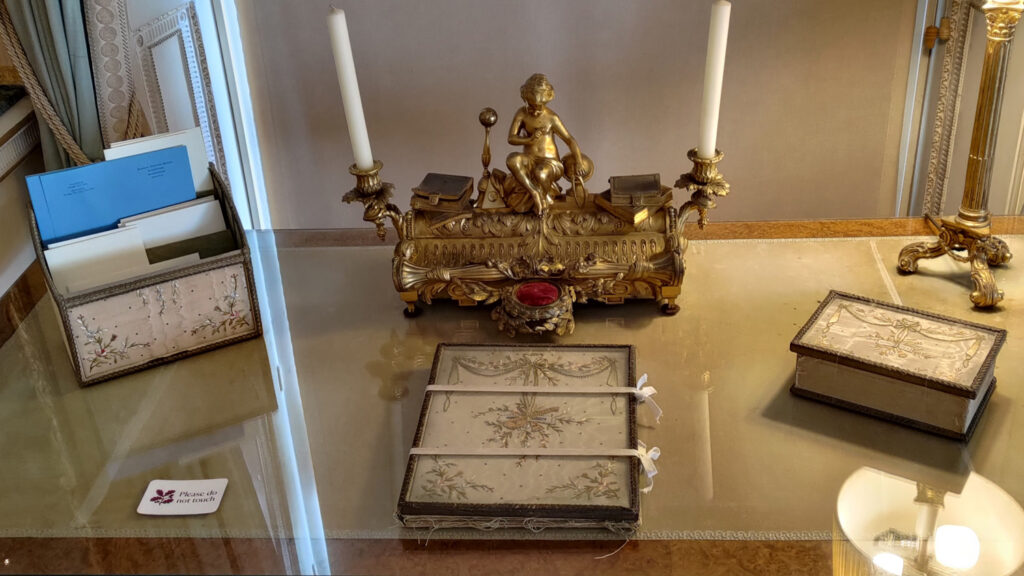
You can check out the full set with the following links:
Sadly I couldn’t find information about when these were stitched and by whom. But I couldn’t help wondering if they might have been the work of the last house owner’s sisters. As upstairs in the main bedroom, the bed is covered with an English paper piecing hexagonal quilt that was made by the owner’s sisters. I’m afraid I forgot to take a photo of that one, so you’ll have to visit to see it for yourself!
Uppark House
Uppark had quite a few embroidery treasures. I think we’ve got Lady Meade-Fetherstonhaugh to thank for this. She moved to Uppark in the 1930s and was an expert in textile conservation. So she had a number of the textiles and embroidery in the house restored.
The first we encountered was this four poster bed.
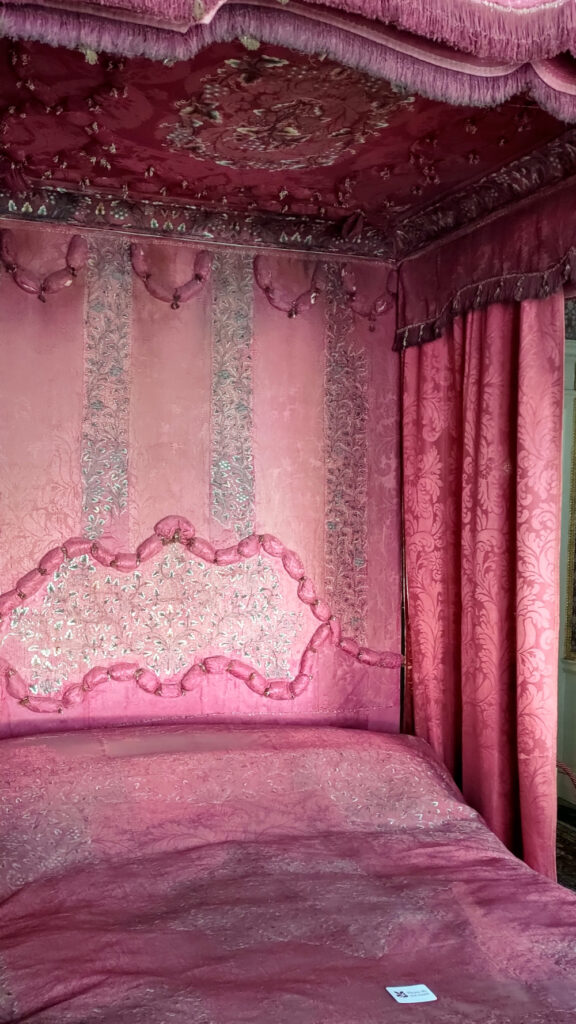
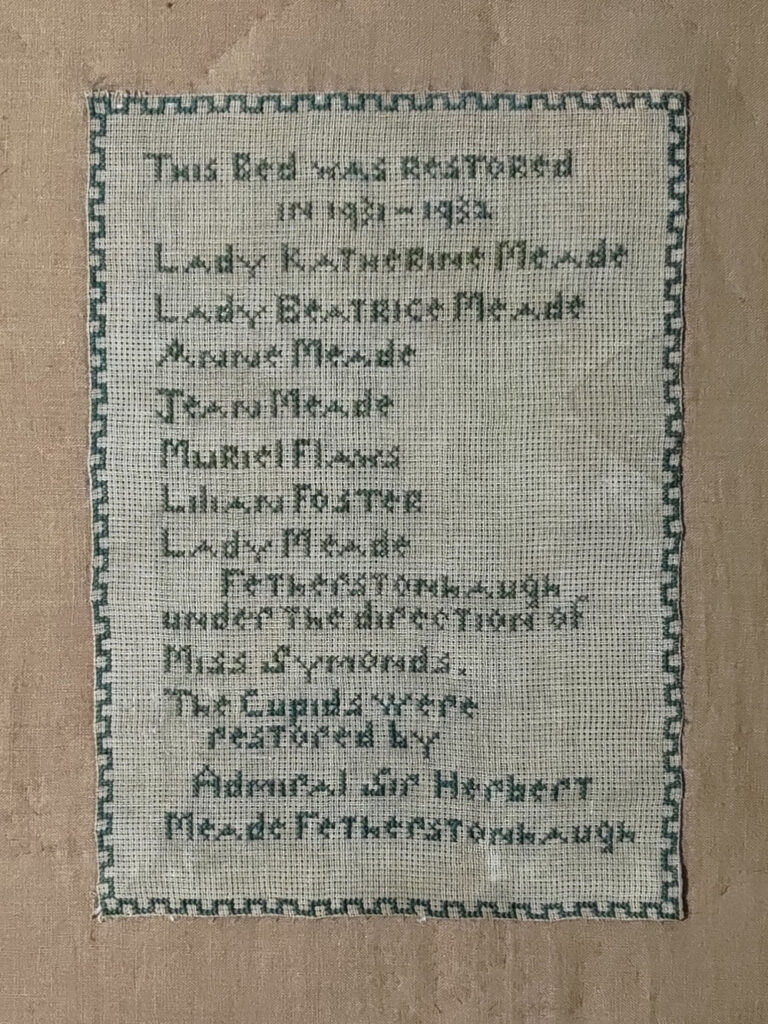
In the 1930s, the bed was restored by a team that included Lady Meade-Fetherstonhaugh. When I first entered the room, I was curious about why the bed was in the middle of the room. But I quickly saw the reason. On the back of the headboard is this stitched record of the restoration team and their work. What a lovely way to ‘sign’ their work.
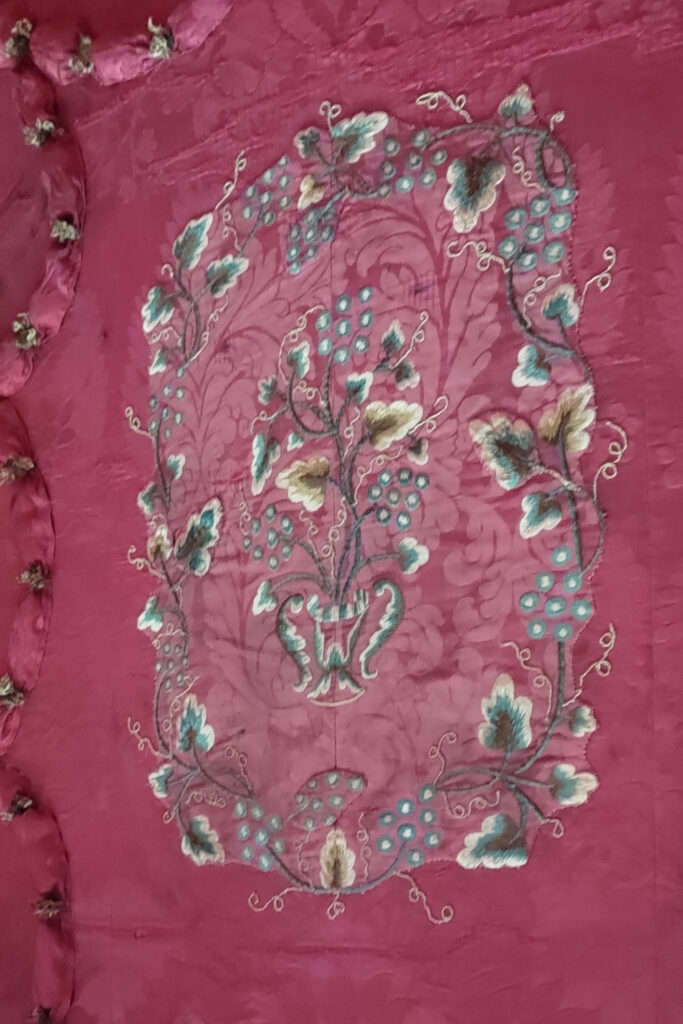
As well as the embroidery on the head cloth, there’s some stunning work in the ‘ceiling’ of the canopy for the occupant to enjoy.
Next, I spent quite a long time taking in the details of this armchair. Another treasure that’s a few hundred years old. It’s believed to have been commissioned for the house around the time it was built, circa 1695.
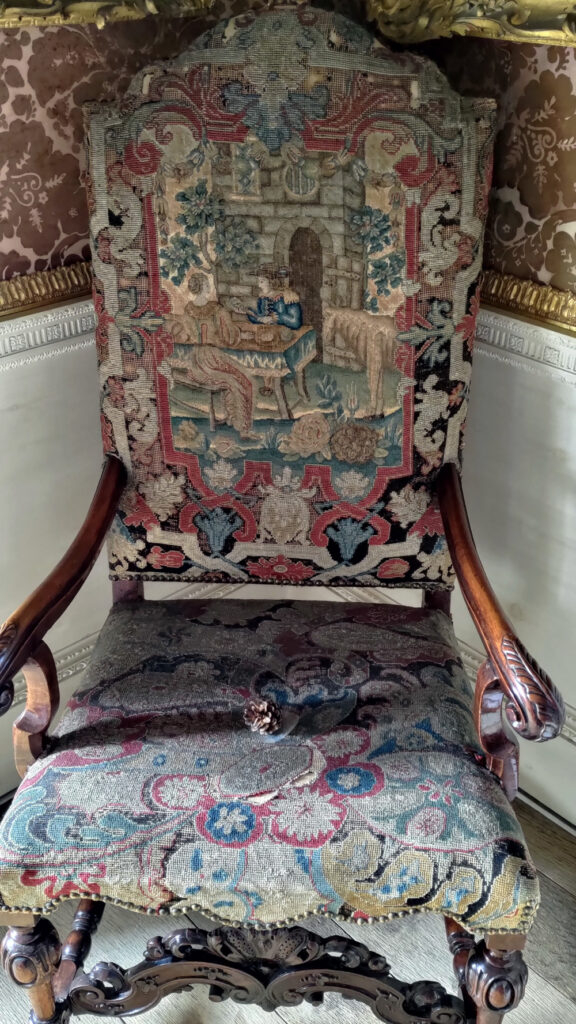
The upholstery is worked in needlepoint and it’s definitely showing signs of wear and tear. You can see through to the canvas in places. I’m not sure you can see it clearly in the photo, but the detail sections in the centre are stitched on a finer canvas that the surroundings.
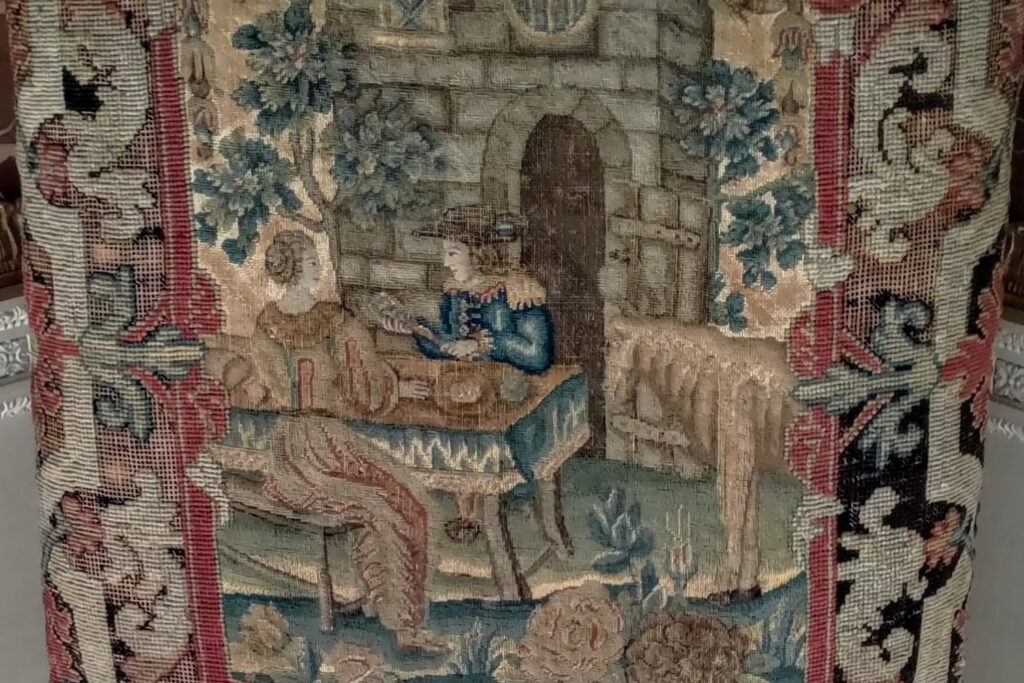
When I’ve come across this in modern pieces, I’ve seen a high count evenweave fabric used. So the detail can be stitched over 1 thread while the rest is stitched over 2 threads. This must mean that in the chair, the different canvases area joined together under the stitching. I wonder if that was the typical practice at the time.
I was also curious to note that the unstitched portions often look like a specific shape in the design. Leading me to question if that could have been deliberate. Although I thought that was very unlikely in this type of embroidery, to my understanding anyway!
But then I looked more closely at the border. It looks like the gaps are be where the dark brown parts of the border design would continue. You can see some intact dark brown sections at the bottom of the chair back. So I wonder if there was something about the dye used for that colour that made the thread more fragile. Causing it to wear away while other colours remain.
Another noteworthy textile exhibit at Uppark are these silk banner screens.
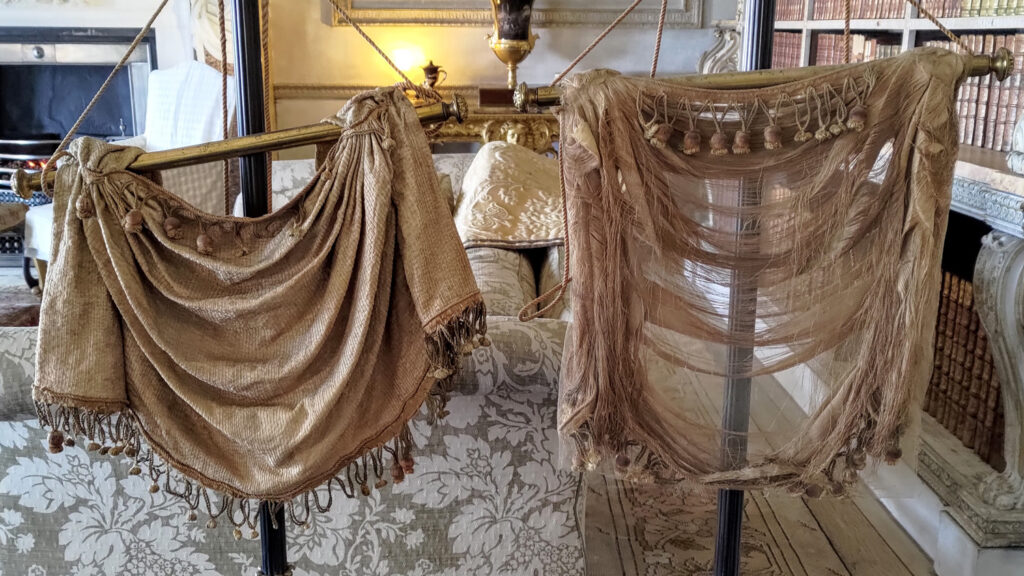
The one on the left has been carefully restored by couching the fragile silk to a supporting fabric. The one on the right hasn’t been restored. I thought that was a clever display choice. So you can see just how fragile the silk has become and what a difference the restoration makes!
The D-Day Story and the Overlord Embroidery
I couldn’t talk about embroideries to be found in Hampshire and not include the epic Overlord Embroidery. An 83 metre long embroidery that’s found within The D-Day Story museum.
The Overlord Embroidery tells the story of D-Day and the battle of Normandy through 34 hand stitched panels.
The panels were designed by a young British artist, Sandra Lawrence and then stitched by the Royal School of Needlework. The panels are appliqués that use over 50 different materials in total, including actual uniforms. With additional embroidery details added throughout. It took the RSN team five years to stitch it.
I’m afraid it’s been a few years since I visited and I couldn’t find my photos. However there are some on The D-Day Story website so you can get a flavour of the amazing embroidery if Portsmouth is a bit too far to travel.
An added bonus in my opinion is that the museum is on the seafront, so you can easily combine a visit with a walk along the promenade.
More embroidery day trips to come!
I hope you’ve enjoyed this little tour of some of the embroidery delights to be found in Hampshire and West Sussex. I’ve certainly enjoyed going back over the photos and finding some extra information about the pieces.
This has inspired me to make sure I keep a close eye out for more embroidery treasures. If you know of any, please do let me know in the comments!